Why a quiet year can be a good time to keep investing.
Stockspot clients don’t need much encouragement to top up after a strong year. But when returns slow down, the questions start coming into our client care team.
Should I stop adding money? Would I be better off in cash or my offset account? Should I wait until things improve?
Nobody enjoys putting money aside each month and feeling like they’re getting nowhere. But waiting for better returns before investing again can mean waiting until prices have already recovered.
I wanted to see what our own numbers said about this.
We looked at what happened after Stockspot’s Topaz portfolio returned less than 3% over the previous year. Did weak returns continue? Or were those disappointing years followed by something better?
The results were interesting.
What happened after returns fell below 3%?
Topaz returned 2.2% after fees over the year to 31 October 2026.
We examined every similar month-end when its previous 12-month return was below 3%, as it is now. We then measured the return over the following year.
There were 31 observations in our performance history with a full year of subsequent returns available.
- Every one was followed by a positive 12-month return.
- The average was 13.4%. The lowest was 5.7% and the highest was 22.1%.
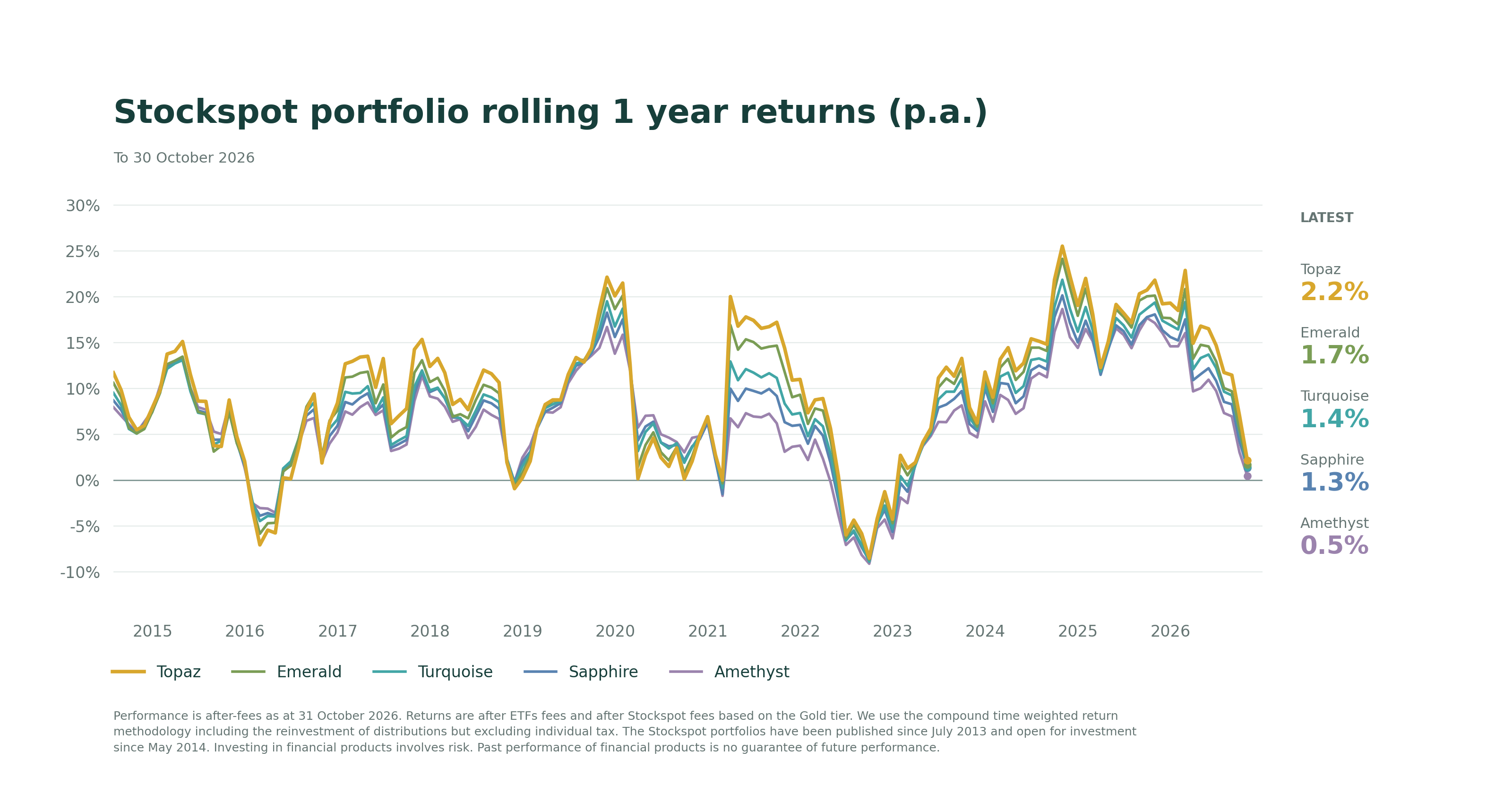
We saw weak one-year returns in 2015–16, 2018–19 and 2022–23 too. In each of those periods, every qualifying month-end below 3% was followed by a positive return over the next 12 months.
People who kept holding participated in those recoveries. Those who kept topping up had their new contributions invested for the recovery too.
To be clear, these aren’t 31 separate market cycles. Several observations came from consecutive months in the same downturn. Our performance history starts in July 2013, so we’re also working with a limited sample. A longer history could include periods when even diversified portfolios took much longer to recover!
Still, I think the results challenge the gut instinct to sell when recent returns look disappointing. In every example in our history, staying invested delivered a positive return over the following year.
There’s another part of the current result worth mentioning.
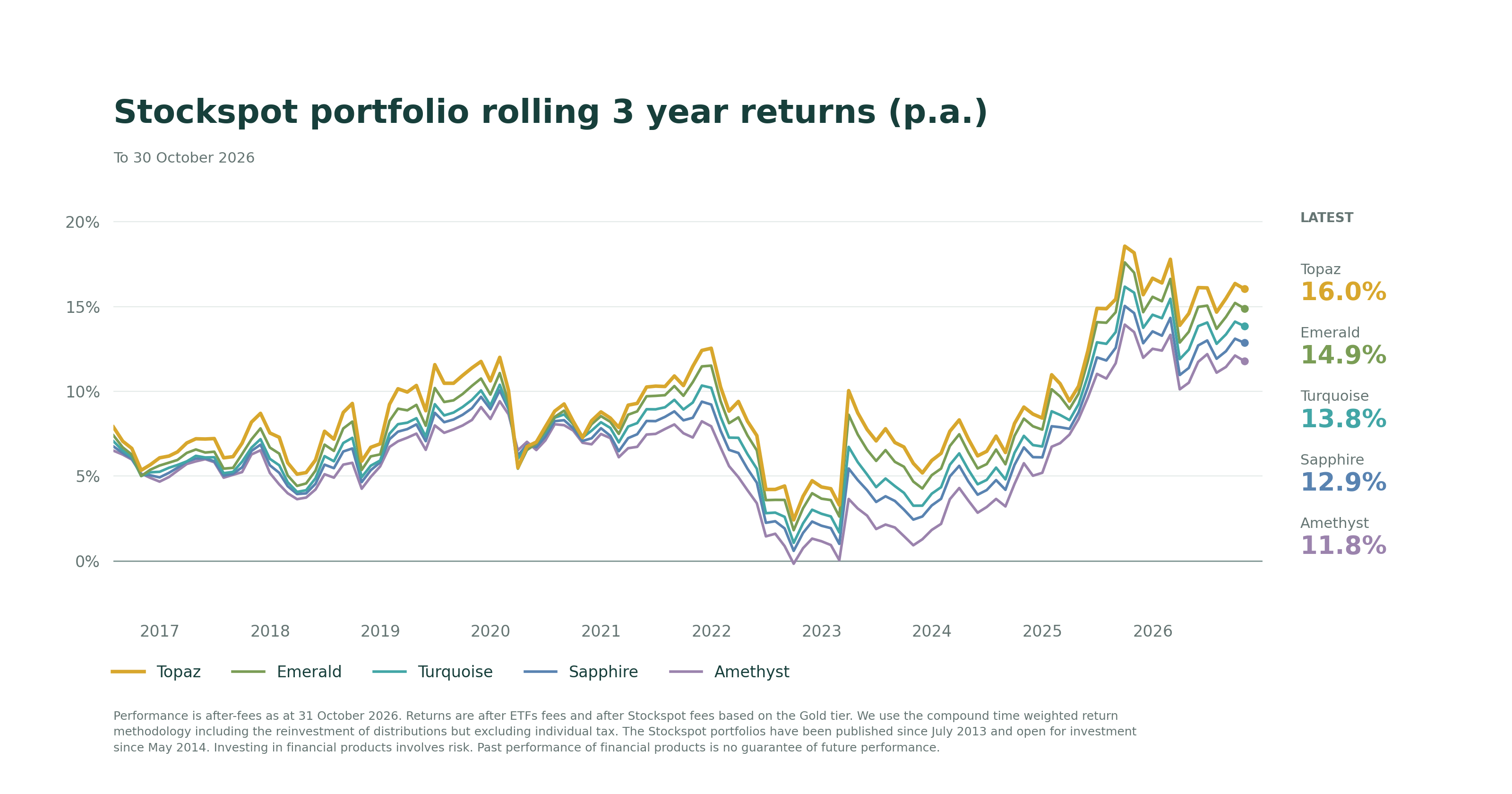
Topaz’s three-year return is still 16% a year after fees. That includes the latest year’s 2.2%. The returns before this quieter period were very strong.
Maybe markets ran a bit ahead of themselves and have spent the past year catching up.
Of course, that’s little comfort if you only invested a year ago. You didn’t receive those earlier gains – you’ve only experienced the quiet bit.
Regular investing can avoid the trap of extrapolating recent returns
Buffett’s advice to “be greedy only when others are fearful” sounds straightforward but following it with your own money is harder.
You don’t have to make a heroic investment at the bottom of a crash to put it into practice. Sometimes it’s as ordinary as leaving your regular monthly top-up running.
That’s one of the things I like about dollar cost averaging. You don’t have to constantly watch markets to decide when to invest. You put in a regular amount rather than asking yourself each month whether now feels like a good time.
When prices fall, that amount buys more ETF units. Sure, it’s tough seeing your existing balance fall. But on the positive side, your next contribution is buying at lower prices.
Stopping your top-ups until things improve can mean missing those lower prices and by the time you feel comfortable again, the recovery may already be well underway.
That doesn’t mean stretching beyond what you can afford, or investing money you’ll need soon. But if your cash flow and goals haven’t changed, a disappointing one-year return isn’t much of a reason to stop!
Look beyond the year you’ve just had
One-year returns move around a lot. A strong month drops out of the calculation and a weak month comes in. The number can change quickly without anything changing about your investment plan.
But if you look at three years instead, the swings start to settle down.
Then look at five!
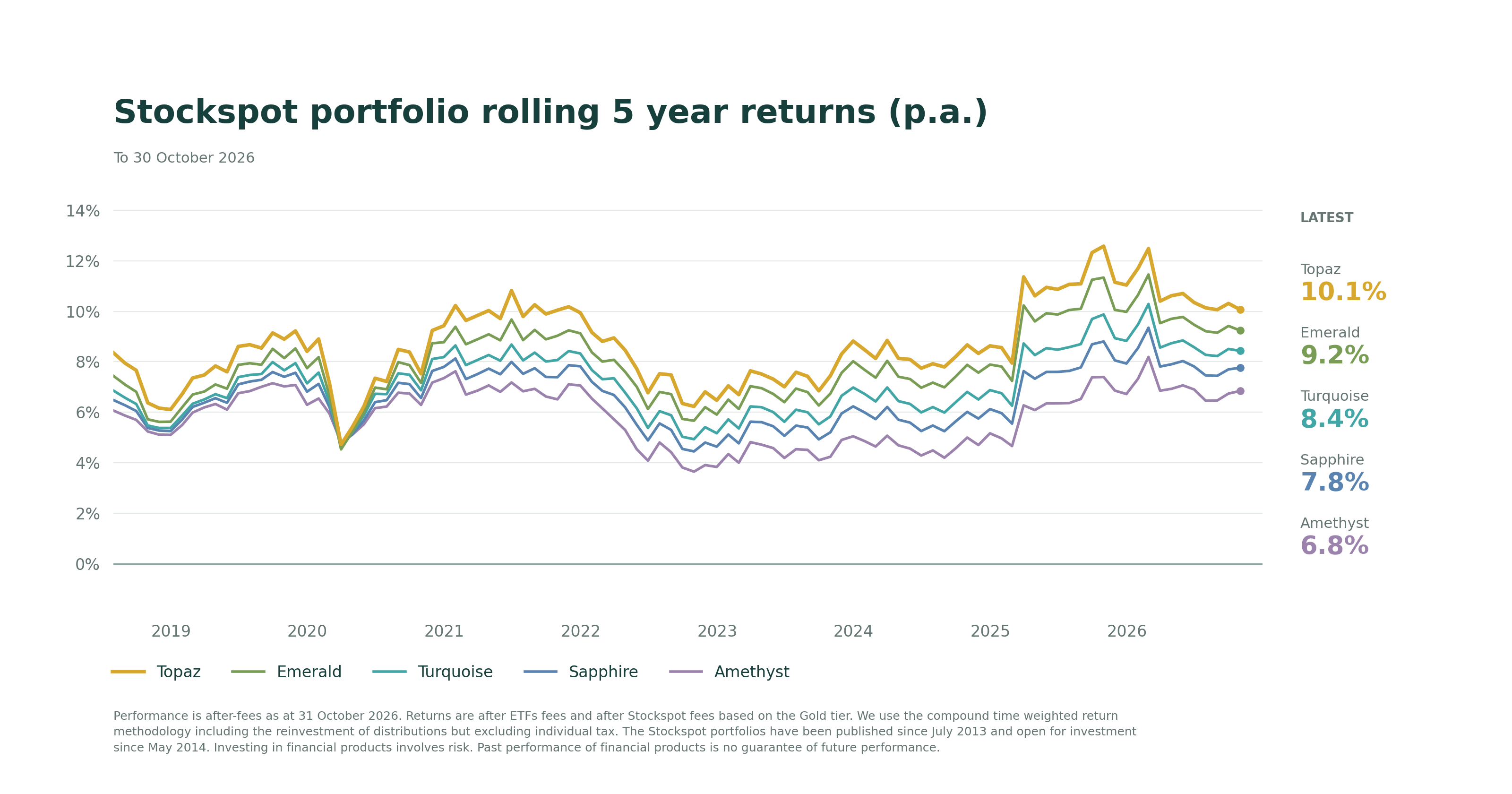
All five Stockspot portfolios had positive returns across every rolling five-year period measured in our history. Topaz’s latest five-year result was 10.1% a year after fees.
Nobody received that return in neat annual instalments. There were falls, recoveries and stretches when holding cash would have felt much easier.
But a longer horizon gives those different years time to work together. Short-term sentiment has less influence on the annualised result. Whereas income, earnings growth and compounding have more time to show through.
In other words, less noise and more of the underlying trend!
That’s why I’d be careful about judging a long-term investment by a boring year. If your goals are still years ahead, a flat period may call for patience rather than a change of plan.
Disclaimer: Analysis uses model portfolio returns after ETF fees and Stockspot fees based on the Gold tier. Returns include reinvested distributions and exclude individual tax. Forward-return observations run from July 2014 to October 2025 and overlap. Past performance isn’t a reliable indicator of future performance.