Markets don’t like uncertainty, and an escalating conflict in Iran has created plenty of it.
Whenever tensions rise in the Middle East, investors immediately worry about oil supply, inflation and the risk of a broader regional war. That concern quickly feeds into markets. Oil prices move higher, share markets become volatile and safe haven assets such as gold strengthen.
We’ve seen this pattern of geopolitical uncertainty many times before.
When Russia invaded Ukraine in 2022, global markets fell more than 10% in the early months. During Brexit in 2016, markets initially dropped sharply before stabilising and recovering. Last year, surprise US tariffs triggered another swift sell off of around 20% in US shares in just a month.
Each episode felt significant at the time. Each generated headlines predicting deeper trouble ahead. And each one eventually faded as markets adjusted and moved forward.
What’s driving markets
The main way Iran impacts markets is through energy. The region sits at the centre of global oil supply and key shipping routes. Disruptions to the Strait of Hormuz have pushed oil and gas prices higher, as a large share of the world’s energy flows through this narrow passage.
Since early March, oil has risen from around US$65 a barrel to as high as US$115, before easing back below US$100. It’s a sharp move in a short period, but swings like this aren’t unusual during geopolitical flare ups. We saw a similar move when Russia invaded Ukraine in 2022.
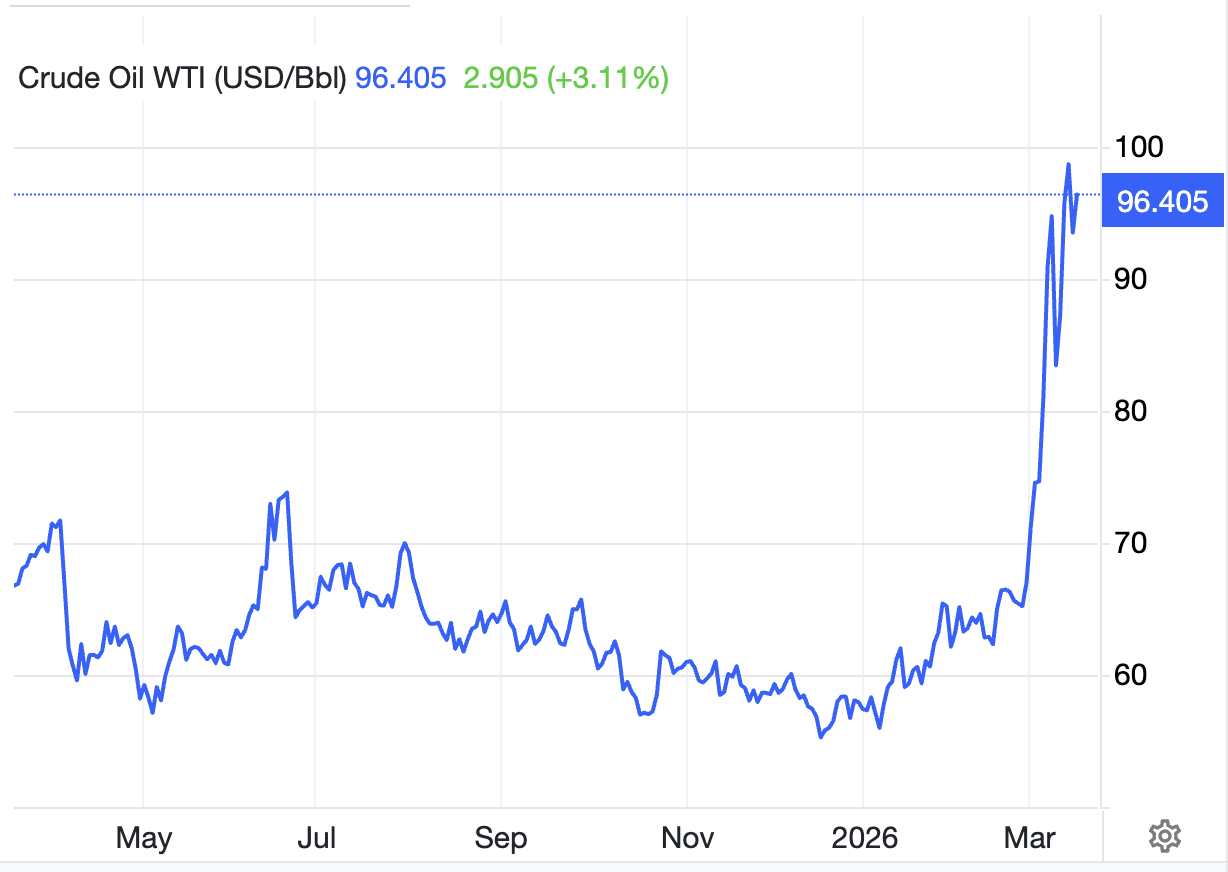
Higher oil prices flow through to inflation expectations. That then feeds into interest rate forecasts and growth assumptions, including here in Australia where rates were just lifted by 0.25%. That chain reaction is what markets are trying to price in.
It’s important to separate the very real human cost of conflict from the way markets respond. While geopolitical events often trigger short term volatility, their longer term impact on diversified investors has historically been limited. A Vanguard study of 22 major geopolitical events found that, on average, markets delivered positive returns 12 months after the initial shock.
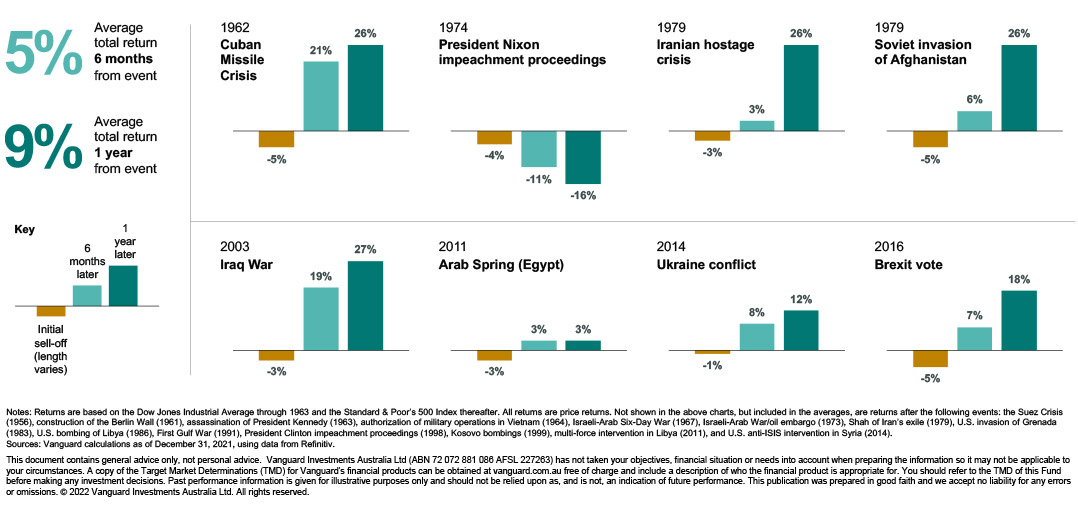
That doesn’t mean markets rise immediately. It does mean that panic selling has rarely proven to be a good long term strategy.
Australian shares have been resilient
It’s also worth noting that Australia’s share market has held up relatively well so far. Other markets like Japan and Korea have fallen more sharply, largely due to their reliance on imported oil.
Thanks to our geographic isolation and our exposure to commodity producers like BHP and Woodside Energy, higher energy and resource prices can actually support parts of the local market. When oil and other commodities rise, Australian resource companies often benefit.
As a result, the Australian market is only down around 7% from its recent all-time highs and is still up strongly over 12 months.
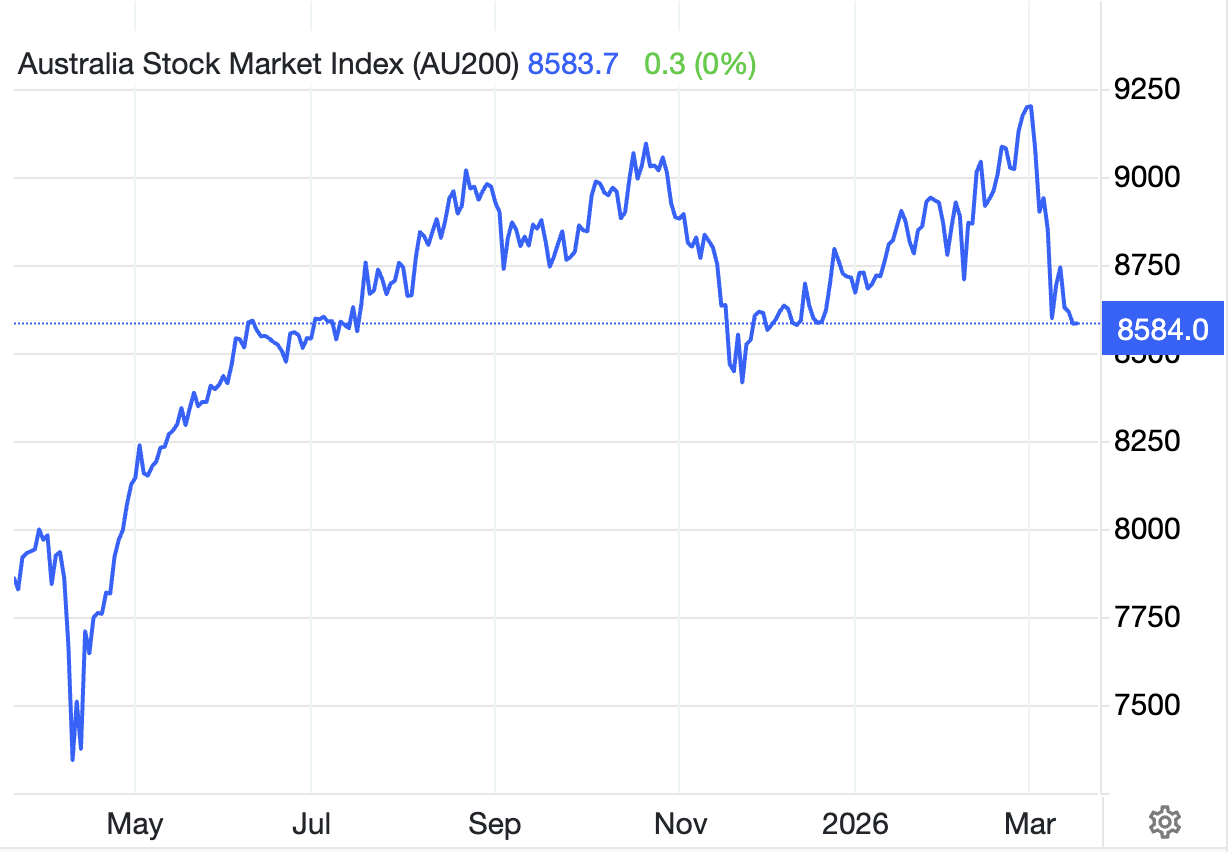
That resilience doesn’t mean we wont see some volatility, but it highlights the benefit of being diversified across regions and sectors rather than relying on a single economy. And because our global shares are largely unhedged, a falling Australian dollar can cushion global share market declines for local investors.
How your portfolio is positioned
Stockspot portfolios are diversified across thousands of companies in Australia, the US, Europe and emerging markets. They also include defensive assets like bonds and gold, which are designed to behave differently to shares during periods of stress.
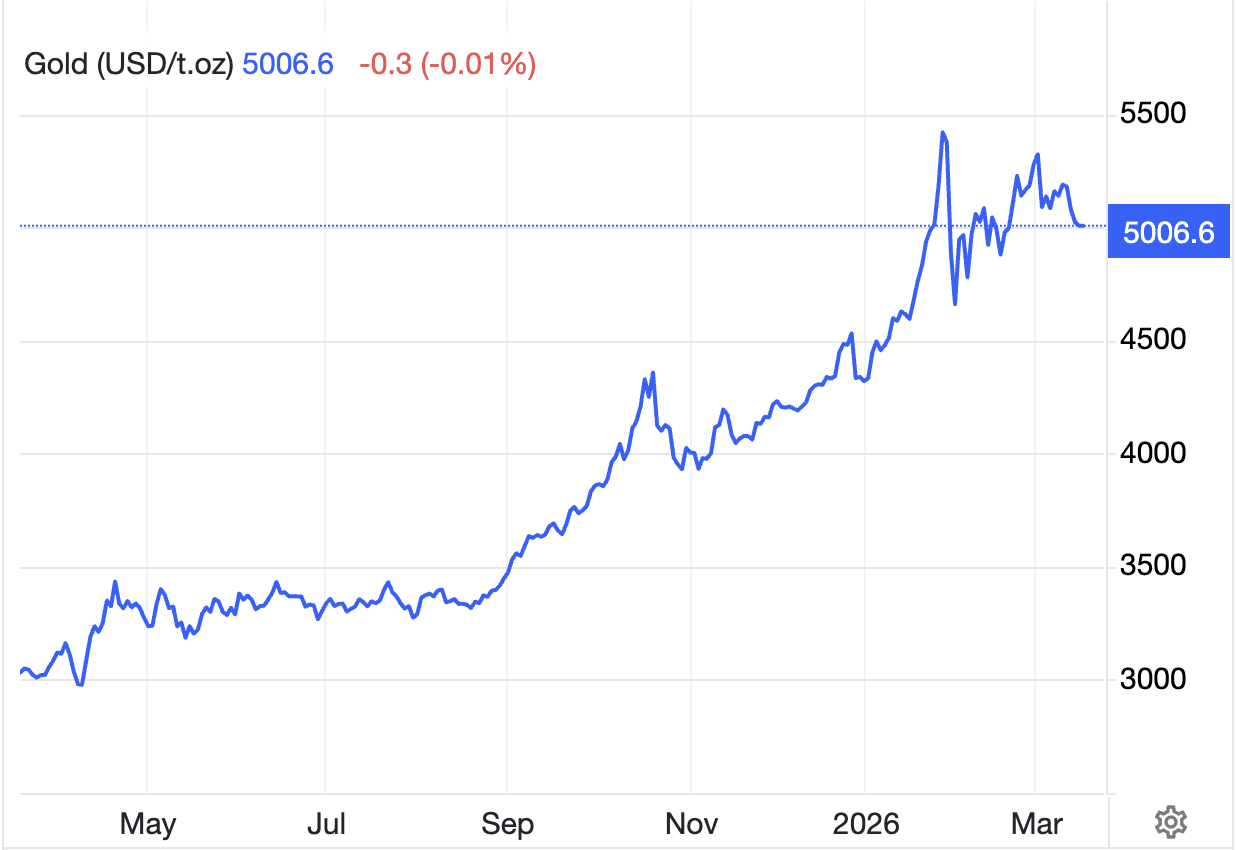
When share markets fall, gold often rises as investors look for stability. When the war broke out, gold initially rose by around 5%. It has since eased as the US dollar strengthened and short term interest rate expectations moved higher around the world.
Gold has risen around 60% over the past year.
No single asset determines your outcome. The strength lies in the combination.
Automatic rebalancing in action
Volatility can feel uncomfortable, but it also creates opportunity.
When markets move sharply, some assets drift away from their target weights. Our automated rebalancing process monitors those movements and steps in when they become meaningful. If shares fall and gold rises, the system trims what has outperformed and adds to what has become cheaper.
This disciplined approach is difficult to apply emotionally in real time. It can feel uncomfortable to buy when headlines are negative. Automation removes that hesitation and ensures your portfolio continues to align with its long term strategy.
You don’t need to decide when to buy the dip. You don’t need to predict how the conflict will evolve. The portfolio management process is already responding in a measured and systematic way.
What you should do now
It’s natural to feel unsettled when headlines are dramatic. But in practical terms, there’s nothing you need to change.
Selling during uncertainty requires you to correctly time both your exit and your re entry. Even professional investors struggle to consistently get those decisions right. That’s why we don’t adjust strategic asset allocations based on news headlines.
Instead, we stay invested, remain diversified and rebalance when required.
If you’re making regular contributions, market dips can actually improve long term outcomes because new investments are made at lower prices. Over time, this lowers your average cost and strengthens compounding.
Since the Global Financial Crisis in 2008, the Australian share market has had 19 dips of between 5% and 10%. The current pullback is around 7%. So moves of this size tend to happen once or twice a year.
Even when prices fluctuate, your investments continue to generate dividends and income. Those distributions are reinvested, which supports recovery when markets stabilise.
Final thoughts
The conflict in Iran is serious, and the humanitarian impact matters far more than daily market movements.
From an investment perspective, your portfolio was built with uncertainty in mind. It’s diversified across regions and asset classes. Defensive assets like gold are playing their role. Automated rebalancing is quietly maintaining discipline.
There’s no need to react to headlines or make changes to your portfolio.
Whether it’s your investments or your super, the most powerful thing you can do is stay calm and stick to your plan. That discipline is what protects and grows your wealth over time.
If you have any questions about your portfolio, our team is always available to help.
This article was first published on March 2 and updated on March 17.