Last October we trimmed our gold position after a strong rally. Just over a year later, we’re buying some back. We’re lifting our gold target from 12.3% to 16.8% across our investment and super portfolios. The extra 4.5 percentage points will come from bonds, and our share targets stay the same.
When we trimmed gold last year, bonds were doing a better job of cushioning portfolios. We said we’d revisit that decision if shares and bonds started moving together more often – which is what we’re seeing now. Gold has also started moving independently from bonds again, which makes it more useful as a diversifier in the portfolio.
Read our earlier October 2025 update
Based on how we expect these assets to behave together, we calculated that a 16.8% allocation to gold gives us the best balance of risk and expected return.
Gold kept rising for a while after we reduced exposure last year. By January 2026 it was trading near US$5,600 an ounce. That pushed some clients’ gold holdings above target again, so we sold a little more to bring those portfolios back towards 12.3%.
As many clients would have seen on the news, there were queues outside ABC Bullion during the rally. But I’m glad we were trimming while all that excitement was happening. Stockspot clients still benefited from the rise and went into this year’s fall with less gold than we usually hold.
On Friday night, gold traded near US$3,500 an ounce. That’s about 37% below its January high in US dollars. In roughly 10 months, the fall wiped an estimated US$15 trillion off the market capitalisation of gold. To put that in perspective, that’s about seven times the size of the Australian share market!
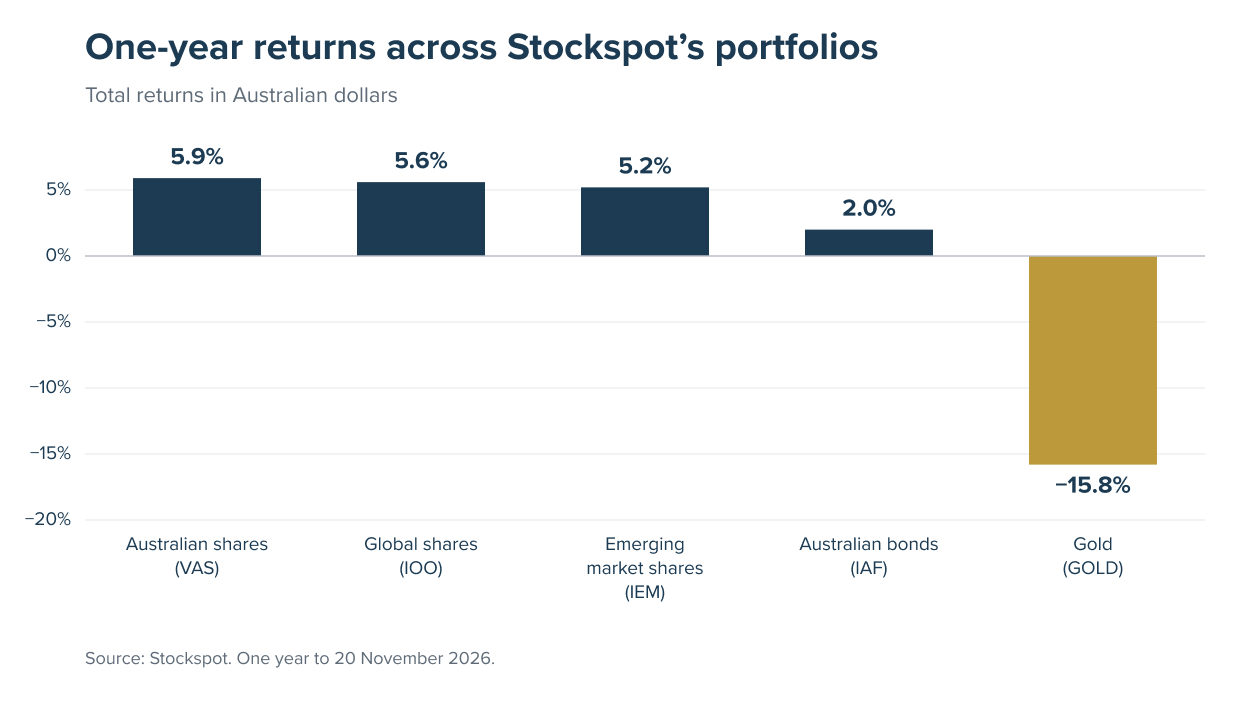
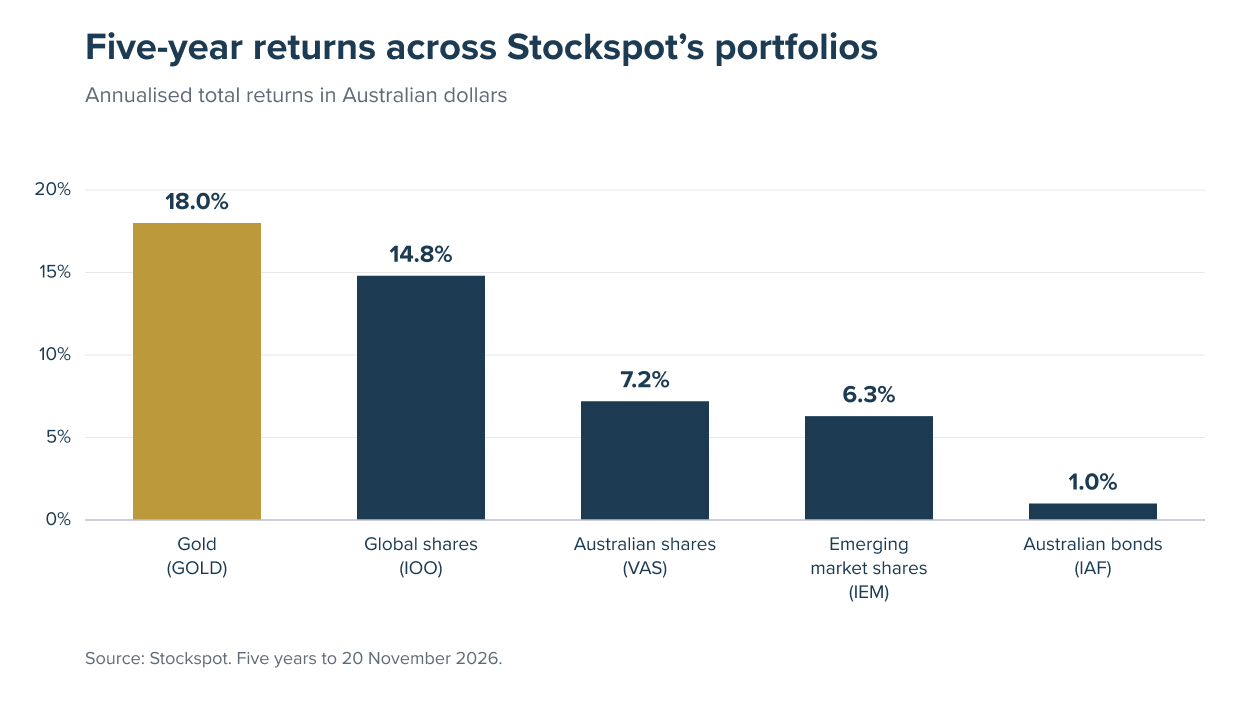
Gold was the weakest asset in our portfolios over the past year. However, over five years it’s still the strongest, returning 18% p.a.
Why we’re taking the extra weight from bonds
There was a time when you could see shares having a bad day and reasonably expect bonds to take some of the sting out of it. That worked well when weaker growth usually meant lower inflation and lower rates. However, when inflation is the problem, shares and bonds can both fall on the same news.
You can see the change in the chart below. Before COVID, Australian shares and bonds tended to move in opposite directions (correlation below the zero line). Lately they’ve mostly moved together apart from a few brief periods below.
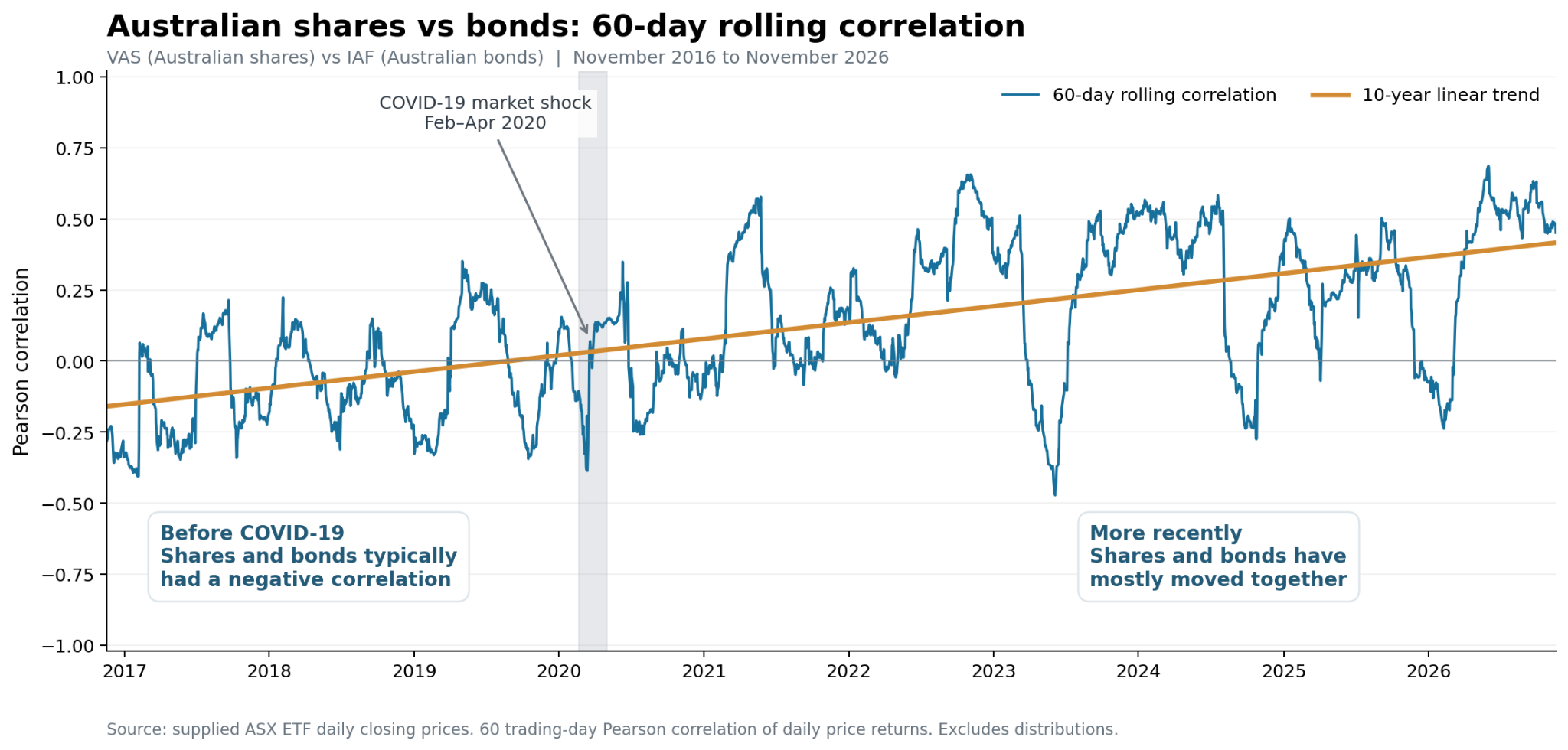
Persistently high inflation is the key driver of this change. Look at what the RBA is dealing with. Inflation rose to 4.3% in September while unemployment reached 4.9% in October. The RBA expects unemployment to rise further and inflation to take longer to come down – that points to the risk of stagflation. People are finding it harder to get work while prices are still rising too quickly.
Bonds still have a place in portfolios because if growth slows and inflation comes down, they can do well. They also pay income, which gold doesn’t. But a bond’s promised future payments are worth less if inflation stays high.
Why gold has become an attractive defensive asset
One thing I’ve been watching for years is what central banks do with their reserves. Over the last few years, more have been buying gold to rely less on the US dollar and government bonds. Gold doesn’t depend on a government or a company making good on a payment. While governments slowed their purchases slightly in 2026, I don’t expect this trend to end anytime soon.
There’s a practical benefit of gold as well – if there’s a share market correction, we could sell some of our gold investment during market hours to rebalance back into shares when they’re cheaper. On the other hand, some private credit funds can restrict withdrawals just when you want access to your money.
If the economy gets weak enough for the RBA to cut rates, the Australian dollar could fall too. A weaker dollar makes the same ounce of gold worth more in Australian dollars, all else being equal. That’s useful when so much of your wealth already depends on how Australia does.
What we’re looking for from gold
We’ve held at least 10% in gold since we started investing for clients in 2014. At 16.8%, this will be our highest target allocation – slightly ahead of our 15% allocation which we held until October 2025. Last year we trimmed into strength – and now we’re buying back into weakness. The price is lower than 12 months ago as the heat and speculative money comes out. More importantly, gold is starting to move independently from bonds again which makes me comfortable giving it a larger weight.
I still find it surprising how many advisers, asset allocators and super funds own barely any gold. If shares and bonds keep moving in tandem when inflation is high, I think more of them will have to make room for it in their portfolios.
After such a strong run in 2025, gold could still get cheaper from here. But I think it’s an asset clients will be glad to own if inflation stays high and shares and bonds both struggle over the next few years. At today’s prices, I’d rather have a little more gold and a little less riding on bonds.
FAQs
Why is Stockspot increasing its gold allocation now?
Shares and bonds have been moving together more often. That makes bonds less useful as a cushion when shares fall. Gold has recently started moving independently from bonds again. It’s also cheaper than when we trimmed it last October.
Why 16.8% when you previously held 14.8%?
The right weight depends on what gold adds to the rest of the portfolio. Today we think it can do more of the defensive work because shares and bonds have been moving together more often. At 16.8%, this is our highest gold target to date. It still leaves room for bonds, which pay income and can do well when inflation falls and growth slows.
Does this mean Stockspot thinks gold has bottomed?
Gold could fall further. We trimmed after a big run last October and rebalanced some portfolios again during January’s rally. We’re comfortable adding at today’s lower price because of how gold fits alongside shares and bonds. That decision doesn’t depend on picking the absolute bottom.
Does this change the mix between growth and defensive assets?
The overall split stays the same. We’re moving 4.5 percentage points from bonds to gold across our investment and super portfolios. Both sit on the defensive side of the portfolio. The target weights for shares stay the same.
Could Stockspot change the gold allocation again?
Yes. We’ll review how gold, bonds and shares behave together over time. If bonds start offering a more reliable cushion when shares fall, or if gold adds less diversification, we could trim it again.
Do I need to do anything?
No action is needed. We’ll start applying the new targets over the next week. When and how your holdings move towards those targets depends on your rebalancing setting and how close your portfolio already is to the new weights.
What if I’m on Buy Only or Pause Rebalancing?
If you’re on Buy Only, we’ll use available cash, such as new deposits and distributions, to buy more gold where your holding is below target. We won’t sell bonds just to move you to the new target.
If you’re on Pause Rebalancing, we won’t rebalance your existing holdings while that setting is active. If you’d like Stockspot to buy and sell investments as needed to bring your portfolio closer to its targets, you can switch to Rebalance Always.
Why hasn’t my portfolio been rebalanced yet?
16.8% is the new target. Your actual gold weight can differ from it. If you’re already close to the new weights, an immediate trade may make little difference. Where possible, we’ll use deposits and distributions to bring your portfolio closer to target and avoid unnecessary sales.
How will this affect my portfolio’s performance?
With more gold and fewer bonds, your portfolio will benefit more when gold outperforms bonds and less when bonds do better. Gold can be volatile and pays no income. We’re making the change because we think the new mix will better spread risk if inflation stays high and shares and bonds struggle at the same time – which is one of many possible scenarios.